The Ones Who Show Up: Recognizing Jacksonville's Animal Services Officers


There are jobs people see. And there are jobs people only notice when something goes wrong.
Jacksonville's Animal Services Officers live in that second category.
This week, during Animal Services Officer Appreciation Week, we want to be clear about something: this work is hard. And it matters more than most Jacksonvillians know.
What They Actually Do
Animal Services Officers are not "dog catchers." That label is outdated and it is wrong.
The National Animal Care and Control Association recognizes that today's animal field services officers provide a wide array of services to their communities, including saving pets in danger, protecting human health and safety, enforcing laws and ordinances, providing support and education, disaster response, helping lost pets get home, and helping wildlife, livestock, and exotic animals. They are the calm voice in moments of real chaos. And in Jacksonville, they do this work across the largest city by land area in the contiguous United States, 24 hours a day, 7 days a week.
They do not get to pick the easy calls. They take the next one.
The Scale of What Jacksonville Demands
Animal Care and Protective Services responds to more than 30,000 calls for service annually, from rescuing injured strays to investigating cruelty, while protecting and caring for 6,000 to 8,000 animals every single year. On any given day, nearly 500 pets are waiting for adoption inside our shelter.
That is not a small operation. That is a full public safety agency running on commitment and controlled urgency, covering hundreds of square miles of the most geographically expansive city in the lower 48 states.
To put Jacksonville's workload in national context: Best Friends Animal Society data shows that 12,000 animals entered shelters across the entire United States every single day in 2024. Jacksonville's officers are a meaningful part of that number, responding to a city that is more geographically complex than most agencies in the country ever have to manage.

The Work Behind the Numbers
Our officers recently rescued two golden retriever puppies who had spent weeks in neglect before anyone intervened. They investigated and shut down an active dog fighting operation, protecting animals from ongoing abuse that most people never want to imagine. They responded to a home with nearly 80 cats, where a woman had gotten in way over her head, and instead of walking away or defaulting to enforcement, they helped her find a path forward.
They worked with a man who had more dogs than he could responsibly care for and connected him with spay and neuter resources so he could keep his animals and get stable. They show up every day with a list of resources for people in need, because keeping a Jacksonville family and their pet together is often the best outcome for everyone involved.
This is not just enforcement. It is intervention. It is care. It is knowing that the person on the other end of the call often needs help just as much as the animal does.
Closing Calls Faster Than Ever
Thanks to the addition of new protocols, a dispatcher, special investigators and additional officers, high-priority calls, including cruelty, neglect, and sick and injured animals, are being investigated and closed faster now than at any point in our agency's history. That does not happen by accident. It happens because our officers show up with urgency, with skill, and with a commitment to doing the job right even when the job is hard and the hours are long.
Florida shelters as a whole euthanized more than 110,000 fewer cats and nearly 40,000 fewer dogs in 2024 than in 2013. Jacksonville's officers are part of why that number moves in the right direction. Every call they close well, every animal they connect with care, every owner they equip with resources instead of a citation, contributes
to that statewide shift.
The Weight They Carry
What the public rarely hears about is the personal cost of this work. Research shows that animal services workers carry a five times greater risk of developing PTSD compared to the national average, and animal control workers fall into the highest-risk occupational group for workplace-related mental health challenges, alongside police officers and other protective services roles.
NACA (National Animal Care and Control Association) has recognized this reality and launched a Mental Health First Aid certification initiative specifically for animal control officers, acknowledging that ACOs routinely work in situations where people are experiencing high levels of stress and often serve as de facto first responders for human mental health challenges as well as animal emergencies.
Jacksonville's officers carry all of that. They see things most people never will. And then they go to the next call anyway.

The Part That Rarely Gets Said
What does not get enough attention is the quiet work. The dog returned to its family after weeks missing. The Jacksonville family that gets resources instead of a citation. The animal that gets a second chance because one of our officers refused to give up on it. These wins do not make headlines. But they are the real work.
Animal Care and Protective Services is about more than sheltering animals. It is about building a stronger, more compassionate Jacksonville. That statement lives or dies based on the people in the field every day. Our officers are the ones who make it true.
Maddie's Fund, one of the most influential funders in American animal welfare, has invested more than $287 million in grants toward the goal of keeping pets and people together. Every dollar of national investment in animal welfare depends on field officers at the local level doing the community work that makes progress possible. In Jacksonville, that is our team.
To Our Officers
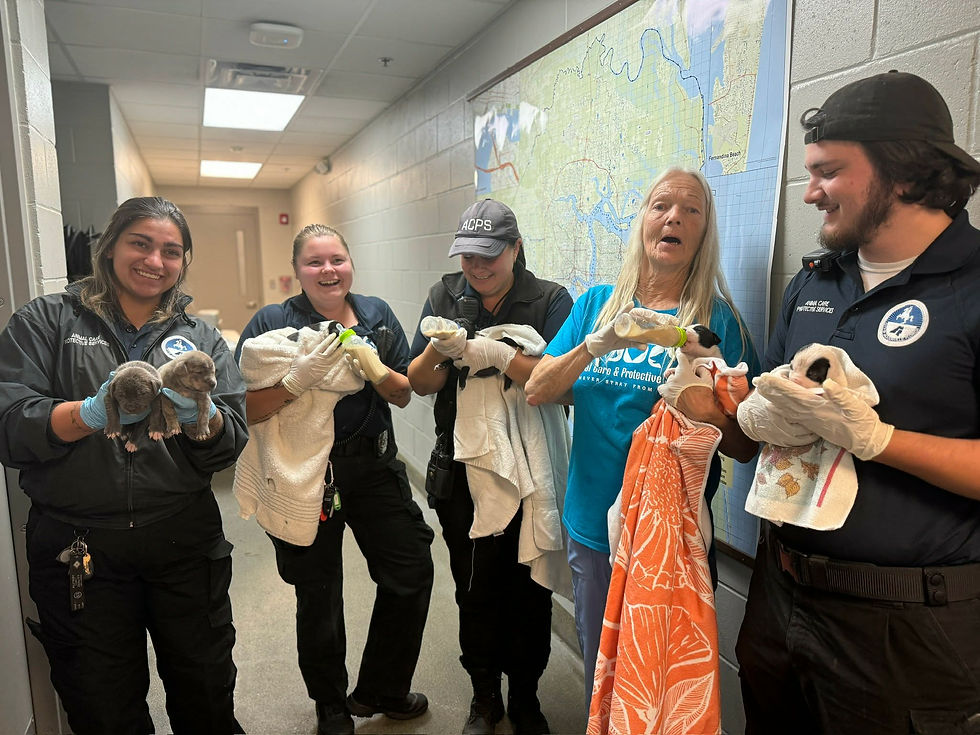
To every Animal Services Officer working Jacksonville's streets, neighborhoods, and calls: we see you. We know what this job asks of you. We know you take calls that stay with you. We know you make hard decisions with limited time and limited resources, often with no applause and sometimes with active criticism from the very public you are protecting.
You show up anyway. Every shift. Across every corner of this city.
NACA says animal services officers work tirelessly, often in challenging and dangerous conditions, to ensure the safety of both people and animals. They deserve more than a moment in the spotlight. They deserve sustained recognition and real support.
We agree. Jacksonville is better because of you. We are going to keep working to make sure this organization reflects that.
A Simple Ask
If you see an Animal Services Officer in Jacksonville, or anywhere , this week, say thank you. Not because it is a designated holiday. Because they earned it, on every single call, every single day, across every mile of this city.
This job is not about recognition. Most of the time, recognition does not come. It is about doing the work anyway.
And that is exactly what they do.
Every single day.
To learn more please go to:


Comments